We’re in central Italy.
The Prevent team was called to perform an inspection with NDT (NON-DESTRUCTIVE TESTING) at a dam.The reservoir that is over 60 years old needed maintenance, and technicians had to check the “health” of the sluices and the consistency of the measurements of the old floor plans in the archive.It was anything but a simple operation. They needed trained professionals who could access the job site using ropes and also inspect the inside of the conduits.
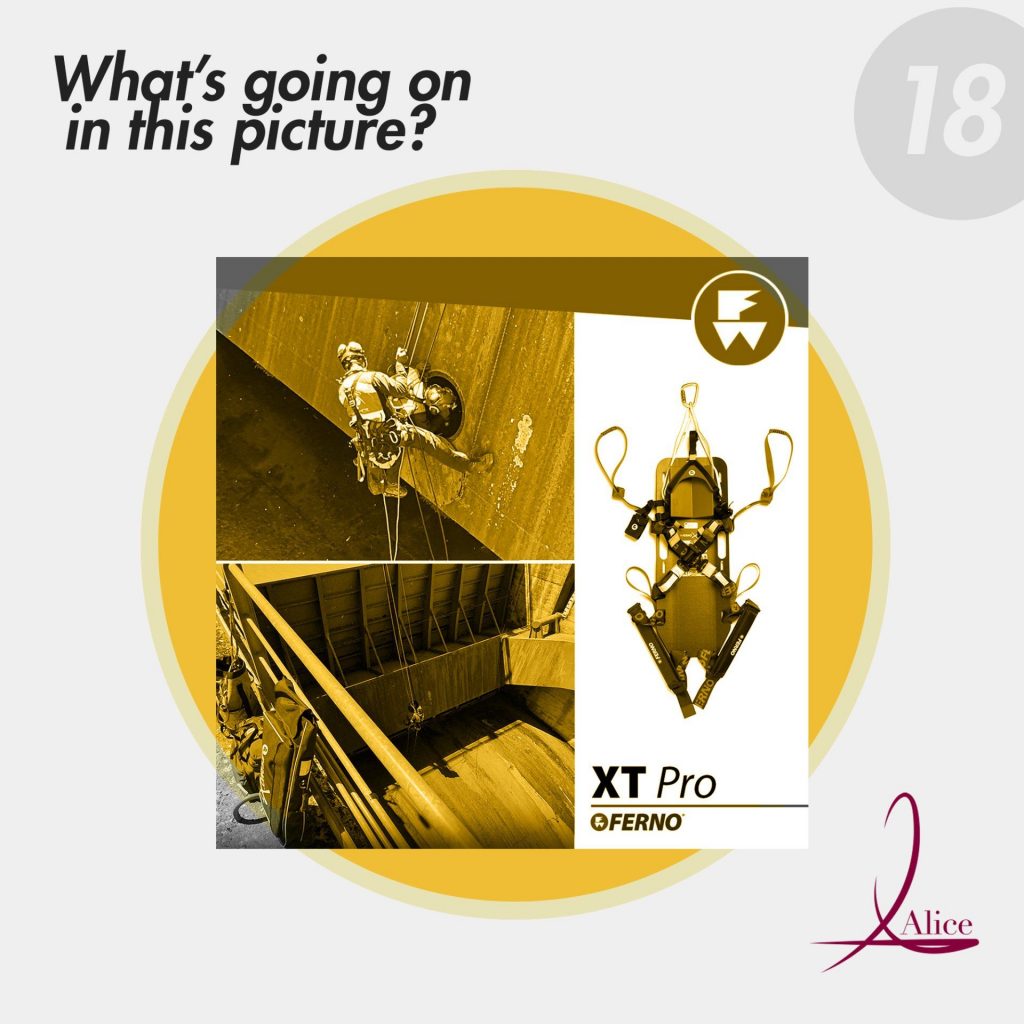
This is where the Prevent team came in. In the photo you can see one of the three sluices where the control and inspection phase began.That green sluices that you see in the photo is a metal box that rises when necessary to regulate the water level in the lake and the flow of water that enters the conduit to the turbine that generates energy. It’s here that my conversation with Giulio Gualtieri begins:
“That bulkhead sluice you see in the photo is empty inside, it’s basically a metal box. The last time they went inside it was about 20 years ago, more or less, and they entered from an inspection hole, a manhole that could only be reached with rope access techniques.The most complicated part of our work isn’t the visual inspection etc…but rather the planning and management of emergencies. Like, if one of us gets hurt, how do we handle the emergency?”.Yes, because there are situations where even the best rescuers would struggle to intervene, or at least be able to do so fast enough. As Giulio correctly points out: “Our work starts with the planning of the emergency, not the planning of the job. This also depends on the number of people in the team and the type of training that the specialist who work with us must have”.Prevent srl mainly deals with two sectors: industrial emergency response in the OIL & GAS SECTOR (e.g. refineries and petrochemicals) and specialised rope access work in the industrial sector. In both these areas, the most important aspect that Prevent has prioritised is the management of the technical medical emergency. It’s a very different approach from that of other rescue situations: the evacuation from confined spaces must be done very quickly and relying only on the help of the team members. “We combine the rope access skills developed with IRATA standards with our medical knowledge that comes from industrial emergency response”. For the job at the dam the Prevent team consisted of three people and the material they had available in the event of an accident was:
1) Complete medical bag (including respiratory management devices)2) Bleeding kit (to manage massive haemorrhages) 3) A scoop stretcher (with a two-person team it’s the only way to avoid the log roll) 4) An XT Pro to be used in the event of evacuation from the sluice and the conduits.Risk assessment:“The most critical event that we had hypothesised in that setting was precisely that a person would get injured inside the sluice, reachable only with ropes access. In this case, the person outside suspended on ropes would alert the rescue workers. Another person above would have roped down on a new set of ropes that we keep as an emergency KIT, and the person below who was outside the box would have gone in to assist the person within. The two on the ropes would then extract the person who had been immobilised on the XT PRO. That way we could quickly and easily immobilise and extract the injured person even in a confined space”. I’ve known the guys at Prevent for several years now and it’s a great business with professionals who know what they’re doing. It’s always interesting to talk about industrial rescue, and there’s so much to learn from them. As Giulio explained to me, they want to make it clear that industrial rescue must be done by qualified, experienced professionals. Industrial Rescue is recognised only in the United States, while in Europe it has no recognition, qualification or specific legislation. Anyone can call themselves an industrial rescuer without having the necessary skills, and this is dangerous because you can’t improvise being a professional.
What’s going on in this picture?