
Introduction
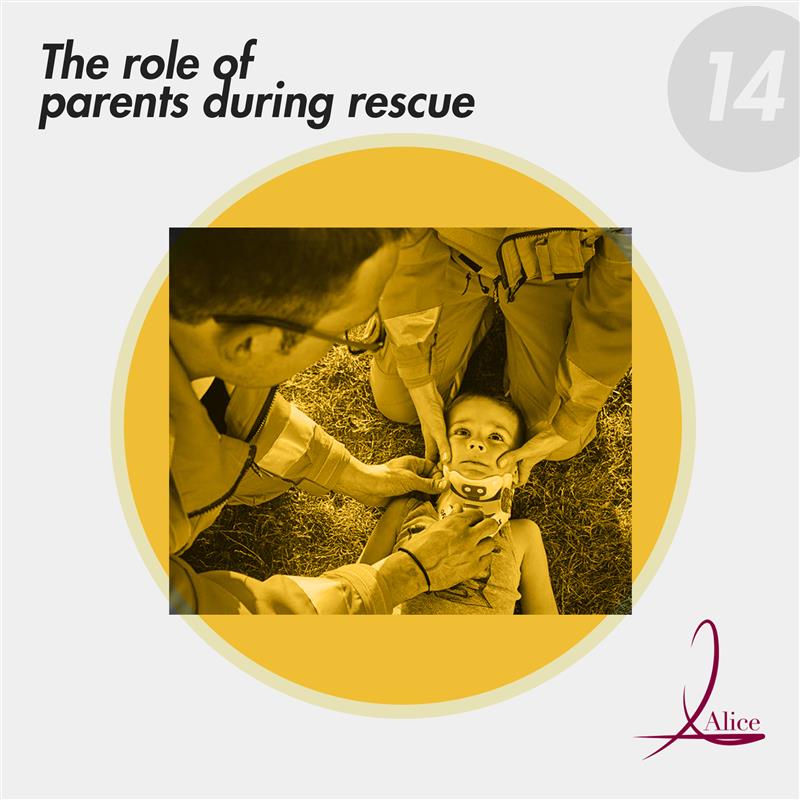
For decades, the cervical collar has been one of the most iconic tools in prehospital emergency care.
Introduced to immobilize the cervical spine in suspected trauma cases, its use was long considered a global standard.
However, in recent years, numerous scientific studies and international guidelines have questioned its efficacy and safety, leading to a significant rethinking of operational practices.
Origin and Rationale for Use
The main objective of the cervical collar is to prevent spinal movement that could worsen a spinal cord injury.
Historically, its application was recommended in all major trauma cases — road accidents or falls from height — regardless of the presence of neurological symptoms.
Early international guidelines, such as those from the National Association of Emergency Medical Technicians (NAEMT) and the American College of Surgeons (ATLS), recommended systematic use as a preventive measure.
Recent Scientific Evidence
Over the past two decades, scientific literature has begun to question the benefits of the cervical collar, highlighting potential risks and a lack of solid evidence supporting its effectiveness in preventing secondary neurological damage.
-
Hauswald et al., 1998 (Annals of Emergency Medicine):
A comparative study between trauma patients in Malaysia (without cervical immobilization) and in the United States (with collars) showed no significant difference in neurological outcomes. -
Linares et al., 1987 (Journal of Trauma):
Demonstrated an increase in intracranial pressure in head injury patients immobilized with a rigid cervical collar. -
Kwan & Bunn, 2005 (Cochrane Review):
This systematic review found no conclusive evidence supporting the collar’s effectiveness in reducing spinal cord damage. -
Vickery, 2001 (Emergency Medicine Journal):
Highlighted that rigid immobilization may cause pain, anxiety, respiratory difficulties, and delays in airway management.Pros and Cons of Cervical Collar Use
Advantages
-
Temporary stabilization: Useful during transport or with uncooperative patients.
-
Psychological and visual protection: Signals the potential presence of a cervical injury to medical staff.
Disadvantages
-
Increased intracranial pressure: Particularly concerning in head trauma cases.
-
Airway compromise: May hinder respiratory management and intubation.
-
Pain and stiffness: Especially in elderly patients or those with degenerative cervical conditions.
-
Delayed clinical evaluation: Routine application can distract from other priorities.
-
Risk of secondary injuries: Due to improper application or excessive movement.
-
International Practices: Where It Is Still Used and Where It Has Been Abandoned
Countries Where the Cervical Collar Is Still in Use
-
United States: Use remains common, though with more selective criteria (ATLS 10th Edition).
-
Canada: Recommended only when NEXUS or Canadian C-Spine Rule criteria are met.
-
Italy: Still widely used in emergency protocols, although some regions are experimenting with alternative approaches.
-
Spain and Portugal: Standardized use, but with growing attention to selective clinical evaluation.
Countries Where the Cervical Collar Has Been Largely Abandoned
-
United Kingdom: Since 2018, the Joint Royal Colleges Ambulance Liaison Committee (JRCALC) has recommended a “selective immobilization” approach, favoring manual control and soft supports.
-
Australia and New Zealand: Updated ANZCOR 2020 guidelines discourage routine collar use, preferring manual stabilization and neutral positioning.
-
The Netherlands and Scandinavia: National protocols have eliminated the rigid collar, replacing it with dynamic immobilization systems and advanced clinical assessment.
Future Trends and Recommendations
The evolution of scientific evidence suggests a shift from a “universal” to a “selective” approach.
New international guidelines recommend:
-
Applying the collar only when neurological signs or significant cervical pain are present.
-
Prioritizing manual stabilization during extrication maneuvers.
-
Training personnel to recognize spinal injuries early and to manage patients dynamically.
The goal is not to completely abandon the cervical collar, but to use it more selectively and consciously, based on clinical criteria rather than procedural automatism.
Conclusion
The cervical collar — a long-standing symbol of prehospital rescue — is undergoing a critical re-evaluation.
Recent scientific evidence calls for a more selective and patient-centered use, focused on safety and comfort.
In modern rescue practice, clinical competence and the ability to adapt procedures to current evidence represent the true evolution of professional care.
References
-
Hauswald M. et al., Out-of-hospital spinal immobilization: its effect on neurologic injury, Ann Emerg Med, 1998.
-
Linares H.A. et al., Cervical immobilization and intracranial pressure, J Trauma, 1987.
-
Kwan I., Bunn F., Effects of prehospital spinal immobilization: a systematic review, Cochrane Database Syst Rev, 2005.
-
Vickery D., The use of the cervical collar in pre-hospital care: a critical review, Emerg Med J, 2001.
-
JRCALC Guidelines, Spinal Injury Management, UK, 2018.
-
ANZCOR Guidelines, Trauma Management, Australia-New Zealand, 2020.
-
ATLS 10th Edition, American College of Surgeons, 2018.